

Environmental Engineering Laboratory
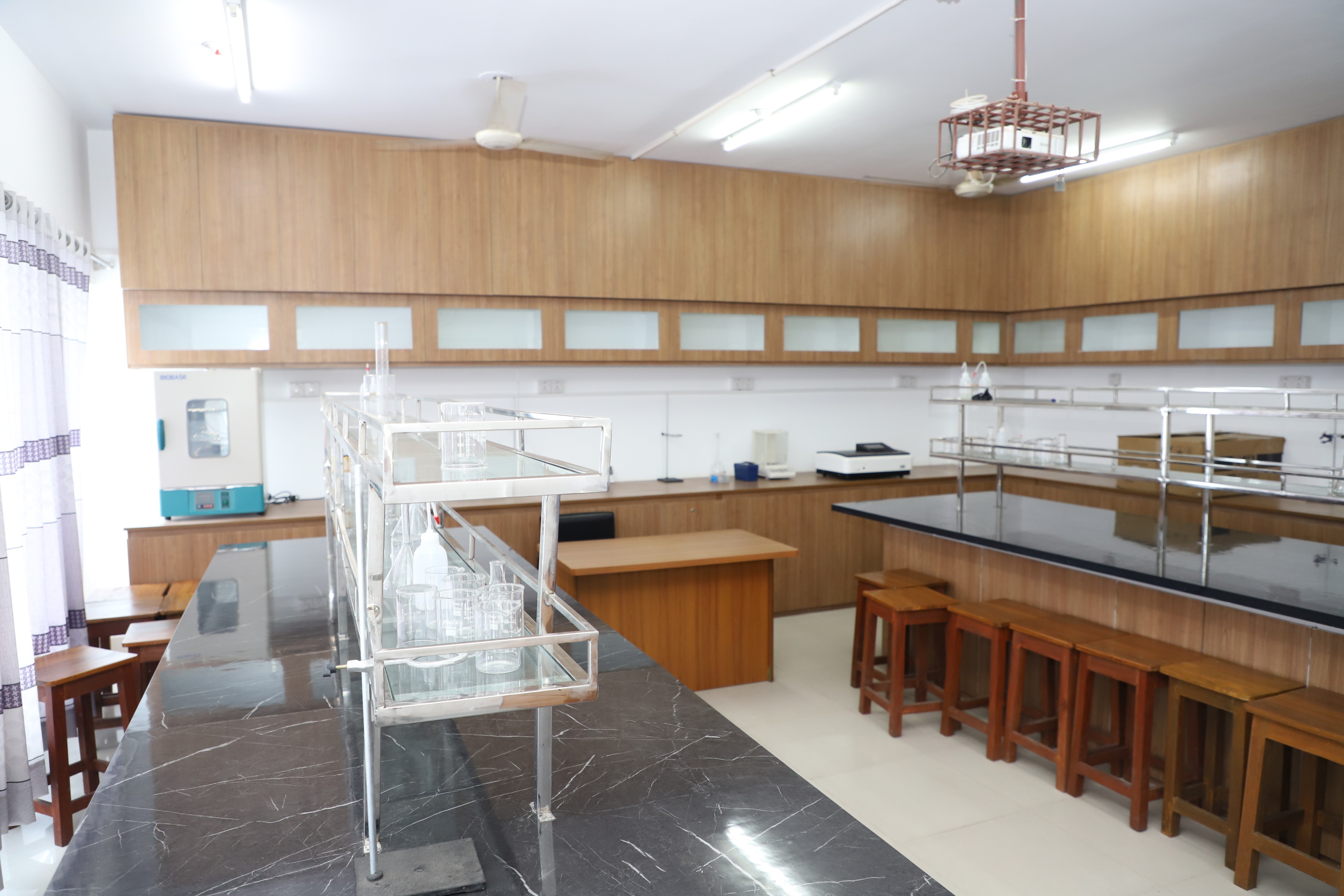
The Environmental Engineering Laboratory under BUBT's Department of Civil Engineering is dedicated to testing water and wastewater quality. Supporting undergraduate coursework, theses, and faculty research, the lab performs physical, chemical, and biological analyses including pH, turbidity, solids, BOD, COD, and arsenic. Following APHA and ASTM standard methods, it provides students with hands-on experience in environmental monitoring, pollution assessment, and water treatment engineering.
About This Facility
Environmental Engineering Laboratory
Department of Civil Engineering | BUBT
📌 Overview
The Environmental Engineering Laboratory, under the Department of Civil Engineering at BUBT, is dedicated to the analysis of water and wastewater quality. It supports the CE 2172: Environmental Engineering Lab course, undergraduate thesis and project work, and faculty research. The lab handles comprehensive parameters such as pH, color, turbidity, total solids, total dissolved solids (TDS), total suspended solids (TSS), carbon dioxide, alkalinity, hardness, chloride, iron, biochemical oxygen demand (BOD), chemical oxygen demand (COD), and arsenic. Testing is systematically conducted in accordance with APHA Standard Methods for the Examination of Water and Wastewater, ASTM standards, and other national/international guidelines, providing students with practical experience in environmental monitoring, pollution assessment, and treatment processes.
🎯 Objectives
- Familiarize students with standard analytical procedures used for the physical, chemical, and microbiological characterization of water and wastewater.
- Provide hands-on experience in operating analytical instruments such as digital pH meters, spectrophotometers, DO meters, and turbidity meters.
- Enable students to determine key water quality criteria and understand pollution indicators along with their environmental and public health significance.
- Bridge the gap between classroom theory and real-world environmental engineering practices through guided chemical and gravimetric laboratory investigations.
- Train students in accurate sample preservation, technical data recording, regulatory result analysis, and scientific report writing.
🧪 Major Experiments
- Determination of pH of Water
- Determination of Color of Water
- Determination of Turbidity of Water
- Determination of Total, Dissolved, and Suspended Solids (TS, TDS, TSS)
- Determination of Carbon Dioxide in Water
- Determination of Alkalinity of Water
- Determination of Hardness of Water
- Determination of Chloride in Water
- Determination of Total Iron in Water
- Organic Pollution Load Valuation (BOD and COD)
- Determination of Arsenic in Water
📋 Machine Inventory
| Item Name | Qty |
|---|---|
| Digital pH Meter (Bench Type) | 1 pc |
| Digital pH Meter (Pen Type) | 2 pcs |
| Spectrophotometer (C-7200) | 1 pc |
| Multifunctional Air Quality Tester | 1 pc |
| DO (Dissolved Oxygen) Meter | 1 pc |
| Digital TDS Meter | 1 pc |
| Filter Support Suction Pump | 1 set |
| Sound Level Meter | 1 pc |
| Precision Digital Balance | 1 pc |
| Digital Laboratory Oven (56L) | 1 pc |
| Electric Utility Heater | 1 pc |
| Laboratory Refrigerator | 1 pc |
| Electric Muffle Furnace | 1 pc |
| Water Distillation Unit | 1 pc |
🛠️ Major Equipment Details & Functions
| Sl. | Equipment | Functional Description |
|---|---|---|
| 1 | Digital pH Meter (Bench Type) | Used for the precise measurement of the pH of water and wastewater samples under controlled laboratory conditions. |
| 2 | Digital pH Meter (Pen Type) | A rugged, highly portable field instrument used for rapid, on-site diagnostics of aqueous sample acidity/alkalinity. |
| 3 | Spectrophotometer (C-7200) | Measures light absorbance and transmittance parameters for quantitative colorimetric determinations of iron, color index, and chemical trace elements. |
| 4 | Multifunctional Air Tester | Evaluates targeted ambient environmental health factors by measuring particulate matter concentrations, ambient gases, and relative humidity. |
| 5 | DO Meter | Measures the mass concentration of dissolved oxygen in natural stream paths and biological wastewater loads. |
| 6 | Digital TDS Meter | Determines total dissolved solids through electrical conductivity metrics to map baseline target salinity profiles. |
| 7 | Filter Support Suction Pump | Provides vacuum-induced negative pressure profiles for specialized glass fiber filtration systems to separate gravimetric TSS loads. |
| 8 | Sound Meter | Measures decibel-scaled acoustic pressures for zoning evaluation and environmental noise impact assessments. |
| 9 | Digital Precision Balance | Ensures precise mass tracing of chemical solid yields, reagents, and ash fractions for analytical gravimetric metrics. |
| 10 | Digital Laboratory Oven (56L) | Maintains fixed heat boundaries between 103–105°C for evaporative water removal during TS, TSS, and TDS runs. |
| 11 | Electric Muffle Furnace | Ignites sample volumes at elevated thermal states (550°C) to break down volatile mass fractions from fixed inorganic structures. |
| 12 | Water Distillation Unit | Generates structural laboratory-grade pure water blocks required for standard solutions, dilution protocols, and analytical blanks. |
🎓 Learning Outcomes
Upon successful completion of this laboratory course, students will be able to:
- Apply standard analytical metrics to quantitatively measure the raw physical, chemical, and baseline microbiological loads in fluid fields.
- Operate complex chemical monitoring gear safely, including specialized vacuum equipment, thermal ovens, and spectrophotometric instruments.
- Analyze and evaluate collected metrics alongside the regulatory boundary sets found in the Bangladesh Environment Conservation Rules and international guidelines.
- Isolate variance factors or analytical limitations and judge the integrity of experimental findings.
- Correlate quantified laboratory findings with real-world engineering remediation, ecosystem health, and community safety applications.
- Produce comprehensive, high-quality technical records and reports tracking calculated data and final engineering conclusions.
Location
Room: 801 Floor: 8, Building: 3, BUBT Main Campus
Capacity
25 Students
Equipment
Digital pH Meters (Bench and Pen types), Spectrophotometer (C-7200), DO Meter, Digital TDS Meter, Filter Support Suction Pump, Precision Digital Balance, Laboratory Oven, Electric Muffle Furnace
Other Facilities in Department of Civil Engineering
Laboratory Facilities
Our department features seven specialized labs complemented by interdisciplinary access to Physics,...
View Details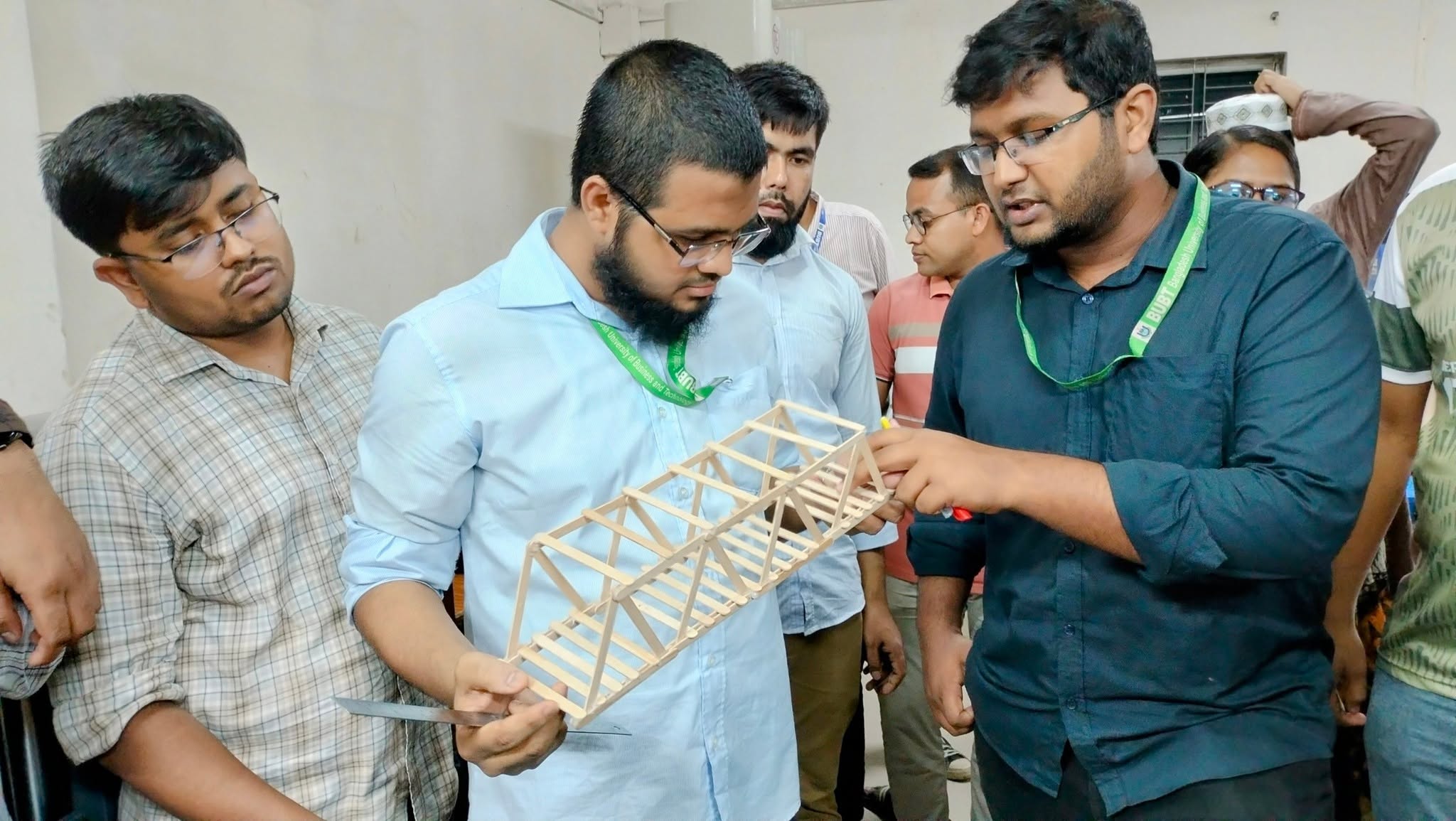
Structural Mechanics Laboratory
Located in Building 1, this lab features a 1000 kN Universal Testing Machine for strength testing st...
View Details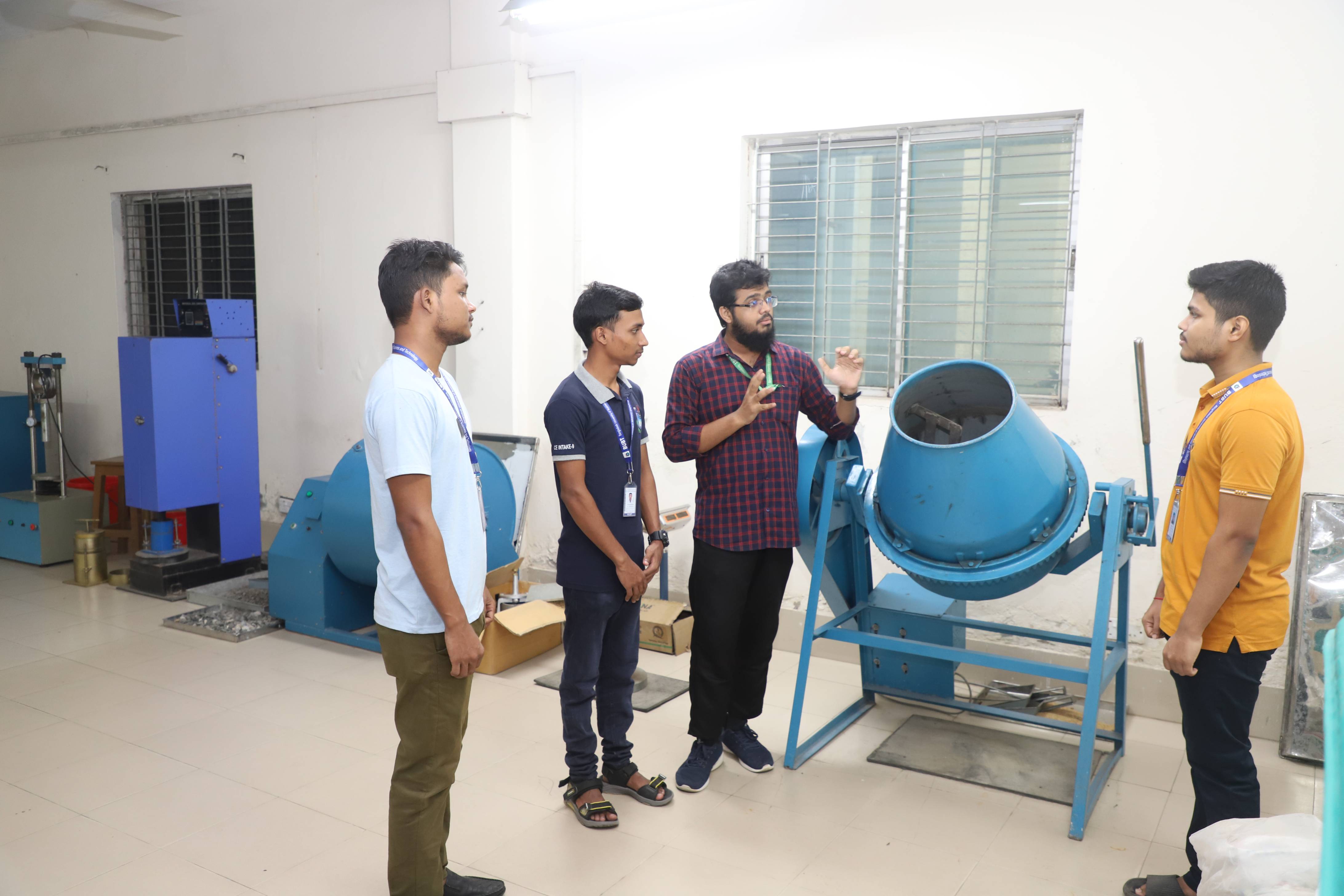
Engineering Materials Laboratory
Located on the ground floor of Building 1, this spacious facility is fully equipped for casting stru...
View DetailsCareer Opportunities
The Department of Civil Engineering at BUBT offers excellent career opportunities for graduates in t...

BUBT Civil Engineering Club
The BUBT Civil Engineering Club aims to enhance students' academic, professional, and personal devel...
View Details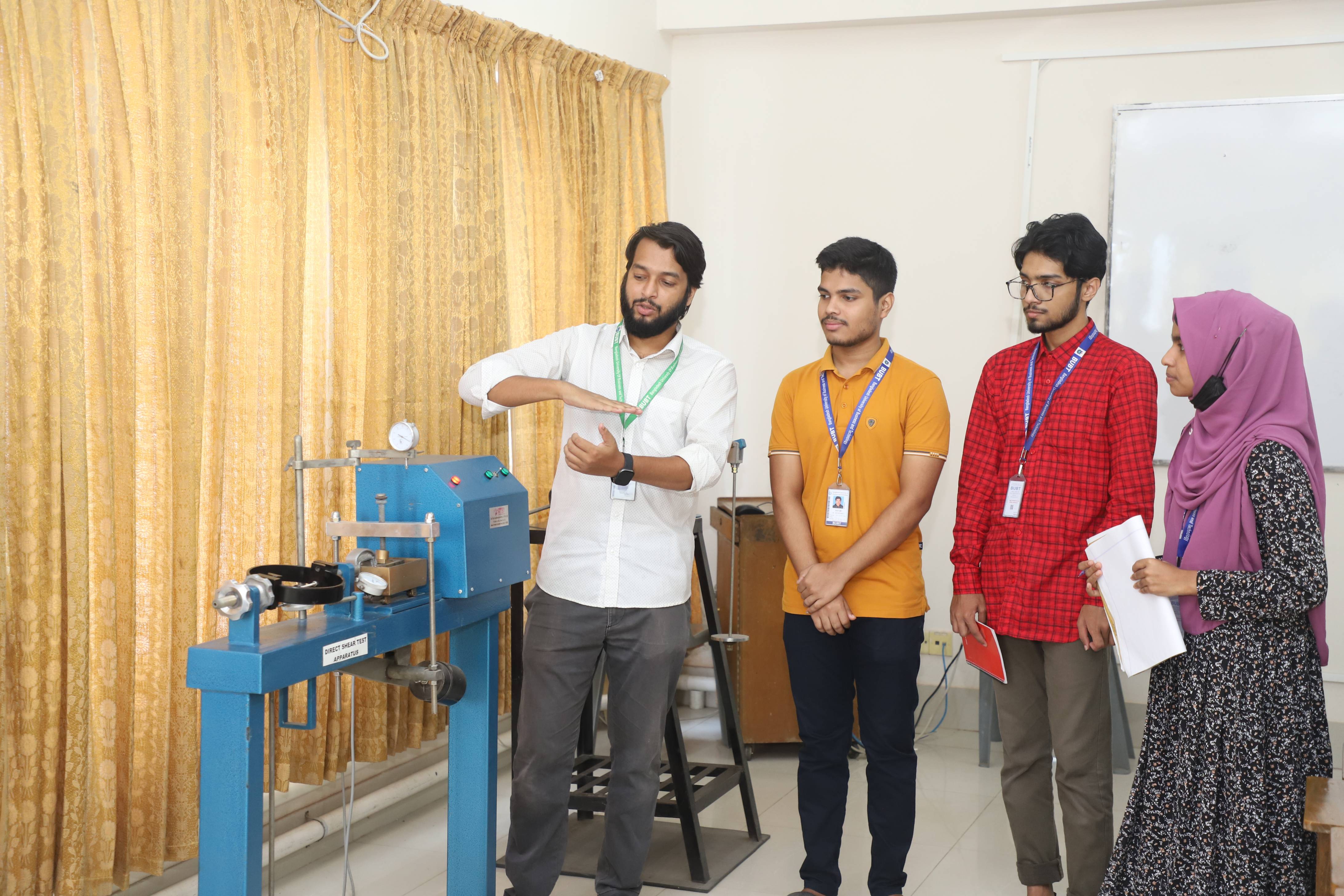
Geotechnical Engineering Laboratory
The Geotechnical Engineering Laboratory is a core undergraduate facility dedicated to evaluating the...
View DetailsNeed More Information?
For more details about this facility or to schedule a visit, please contact the department.